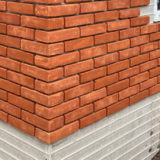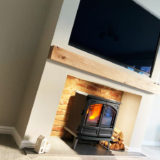




Pointing up is something we always look forward to…… Yes, you read that right!
It may not be cool, it may not be glamorous but boy is it satisfying. Sure, searching for inspiration, ordering samples and choosing your brick slips is the fun part, but pointing up is what really finishes off and ties a brick slip installation together.
Put some thought into your choice of mortar colour and it will allow your brick slips to blend in or stand out as you wish, adding that final touch and unifying the whole. It’s the icing on the cake!
But it isn’t just colour that matters when it comes to mortar. There are many different types of mortar finishes to consider too!
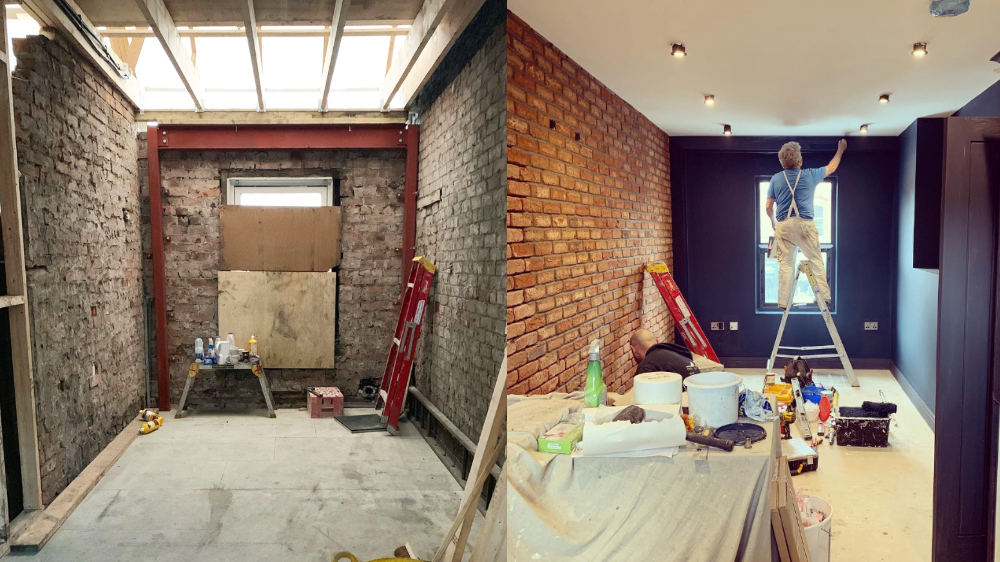
Brick Slip Pointing Mortar
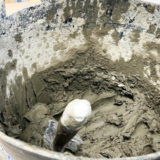
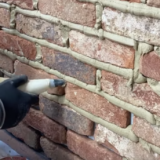
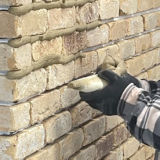
Although it is perfectly possible to use a traditional mortar with brick slips we recommend our own cement-free gun injection pointing mortar for brick slip installations for both ease of use and speed of application.

With five colours to choose from you should have no problem finding the perfect match for your project. And although the product is specifically designed for gun injection it can be mixed stiff and pointed in by hand if you wish.
Once you’ve chosen your mortar the next thing to consider is different types of mortar finishes. Although the differences are subtle they can have an appreciable effect on the overall look of an installation. So what different types of mortar finishes are there and when should they be used?
The Most Commonly Used Different Types of Mortar Finishes
First and foremost, if you’re planning an internal brick slip installation then any of the different types of mortar finishes listed below will be suitable.
The choice is mainly aesthetic. It is only when looking at external installations that some of the different types of mortar finishes may not be suitable.
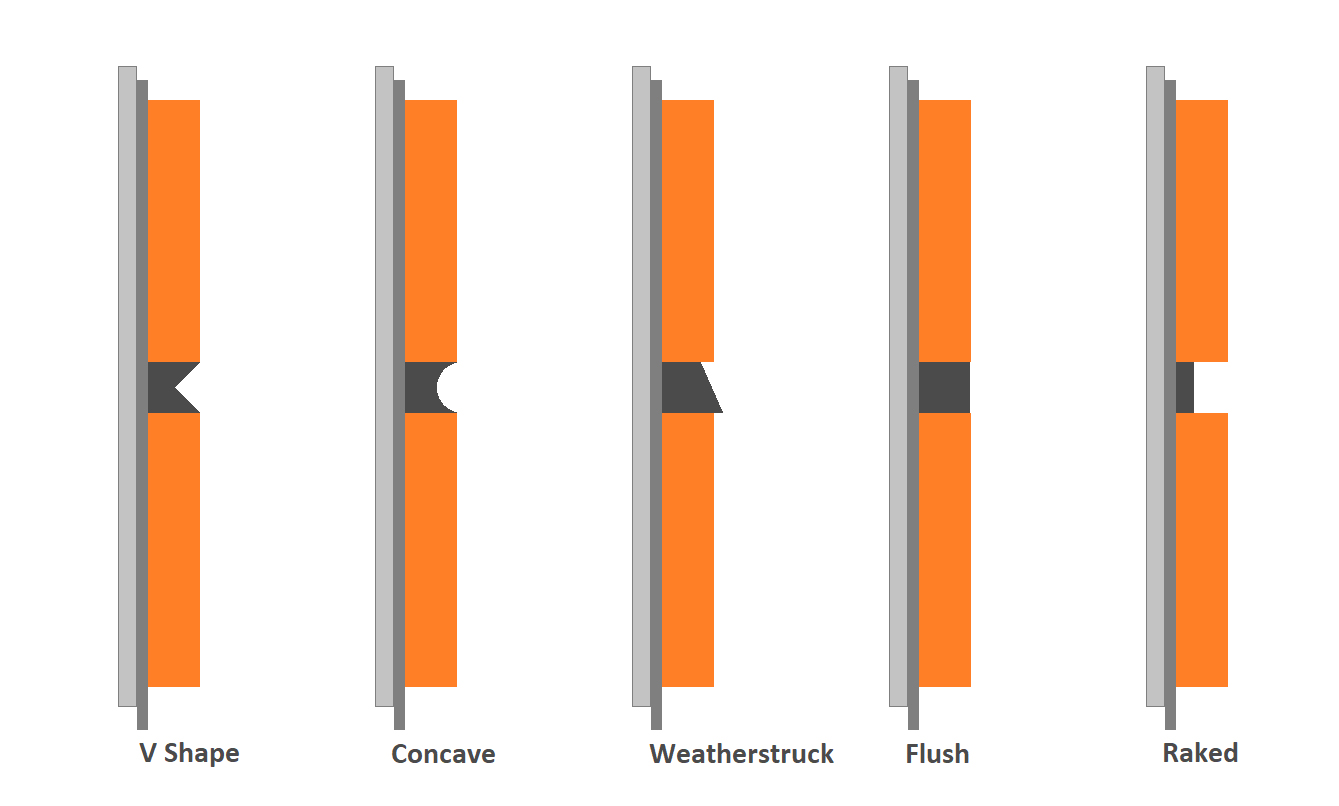
Concave Mortar Joint
One of the most commonly used joints due to the tight seal it forms and its high resistance to water penetration.
Concave joints are made using a curved steel jointing tool and are suitable for internal and external applications.
Struck Mortar Joint
Here the top edge of the joint is finished flat with the brick and the bottom edge is recessed.
This will allow water to pool on the lower edge of each joint so it is best used on interior walls only.
Weathered Mortar Joint
The weathered mortar joint is the reverse of the struck joint, so the bottom edge of the joint is finished flat with the brick and the top edge is recessed.
This joint will shed water and so can be used for internal and external applications.
Raked Mortar Joint
In a raked mortar joint the mortar is raked back evenly to a consistent depth.
This highly emphasises the joint but as it creates a ledge where water can pool, raked joints are best used for internal applications only.
V-Joint
The V-joint is made with a V-shaped jointer or a trowel and is attractive and highly visible.
Like the concave joint, the V-joint is water-resistant and is suitable for internal and external applications.
Flush Mortar Joint
In a flush mortar joint the mortar sits flush with the face of the brick. Flush joints are usually used where the wall is intended to be plastered, because the mortar is not compressed it is less water-resistant than some of the alternatives.
Extruded Joint
The extruded (or squeezed) mortar joint is less applicable to brick slip installations as it is formed naturally when excess mortar is squeezed out between the bricks where appearance is of limited concern.
Although it would, in theory, be possible to create this rustic, textured appearance with our gun injection pointing mortar it would be difficult and time consuming.
Summary
Whichever of the different types of mortar finishes you choose is mainly down to which you prefer the look of.
For external installations we would recommend a concave or V-joint for water resistance but for internal projects the choice is yours.
So pick your slips and mortar and get pointing!